Sourdough bread has exploded in popularity.
It’s seen as a healthier, more natural alternative to supermarket bread. But there’s a problem most people don’t realise:
Not all sourdough is actually sourdough.
In fact, a growing number of loaves on shelves today are what experts call “faux sourdough” — or as the Real Bread Campaign puts it, “sourfaux”.
And once you understand the difference, you won’t look at bread the same way again.
What Is Real Sourdough?
Real sourdough isn’t a style or a flavour.
It’s a process.
According to the Real Bread Campaign:
Sourdough is made using a live starter culture and no other raising agents.
That means:
- no commercial yeast
- no baking powder
- no artificial additives
Just:
- flour
- water
- salt
- and a live sourdough starter
This slow fermentation process is what gives sourdough its:
- flavour
- texture
- and potential digestive benefits
What Is Faux Sourdough?
Faux sourdough is bread that’s marketed as sourdough, but made using shortcuts.
The Real Bread Campaign defines “sourfaux” as products that:
- use baker’s yeast to speed up the rise
- include additives or processing aids
- add acids (like vinegar) to mimic sour flavour
In simple terms:
It looks like sourdough.
It tastes a bit like sourdough.
But it’s not made the same way.
Why Faux Sourdough Exists
The real sourdough process takes time.
- fermentation can take 12–48 hours
- it requires skill and experience
- it doesn’t scale easily in factories
So large producers cut corners.
They use:
- fast-rise yeast
- additives
- flavouring tricks
This allows them to:
- produce bread quickly
- extend shelf life
- sell at scale
But still label it “sourdough”.
The Real Problem: Misleading Consumers
One of the biggest concerns raised by the Real Bread Campaign is this:
There is no clear legal definition of sourdough in the UK.
That means companies can market products as sourdough even if they’re made using completely different methods.
This leads to:
- confusion
- misleading marketing
- unfair competition for real bakers
And most importantly:
Consumers don’t know what they’re buying.
Why It Matters for Your Health
Many people choose sourdough because they believe it is:
- easier to digest
- better for gut health
- lower impact on blood sugar
But here’s the key point:
Those benefits come from fermentation.
And faux sourdough often skips or shortcuts that process.
So you may not be getting the same benefits at all.
How to Spot Real Sourdough
The good news is you can check.
Here’s what to look for:
1. Read the ingredients
Real sourdough should NOT include:
- yeast
- vinegar
- “sourdough flavour”
- additives or preservatives
If you see these, it’s likely faux.
2. Ask how it’s made
If you’re buying from a bakery:
- ask if they use a live starter
- ask how long the dough ferments
Real sourdough takes time.
3. Don’t trust appearance
A crusty loaf with big holes doesn’t guarantee anything.
The Real Bread Campaign is clear:
Appearance, taste and aroma are not reliable indicators of genuine sourdough.
Why Real Sourdough Is Worth It
Real sourdough is different because of the process.
Long fermentation allows:
- natural bacteria and yeast to develop
- complex flavours to form
- the dough to change in ways fast bread cannot
It’s slower.
It’s more traditional.
And for many people, it simply feels better to eat.
The Honest Way Forward
The Real Bread Campaign is pushing for clearer labelling through its proposed Honest Crust Act.
The goal is simple:
- protect real bakers
- give consumers clear information
- stop misleading marketing
Until then, the responsibility falls on us as consumers to:
- read labels
- ask questions
- choose carefully
Final Thoughts
Sourdough has become a trend.
But behind that trend is a craft that has existed for thousands of years.
The risk is that the word “sourdough” loses its meaning.
So next time you pick up a loaf, take a closer look.
Because when it comes to bread:
Real sourdough is a process — not just a label.
Want to experience real sourdough?
The simplest way is to make it yourself using a live starter and proper fermentation. That’s where the real difference begins.
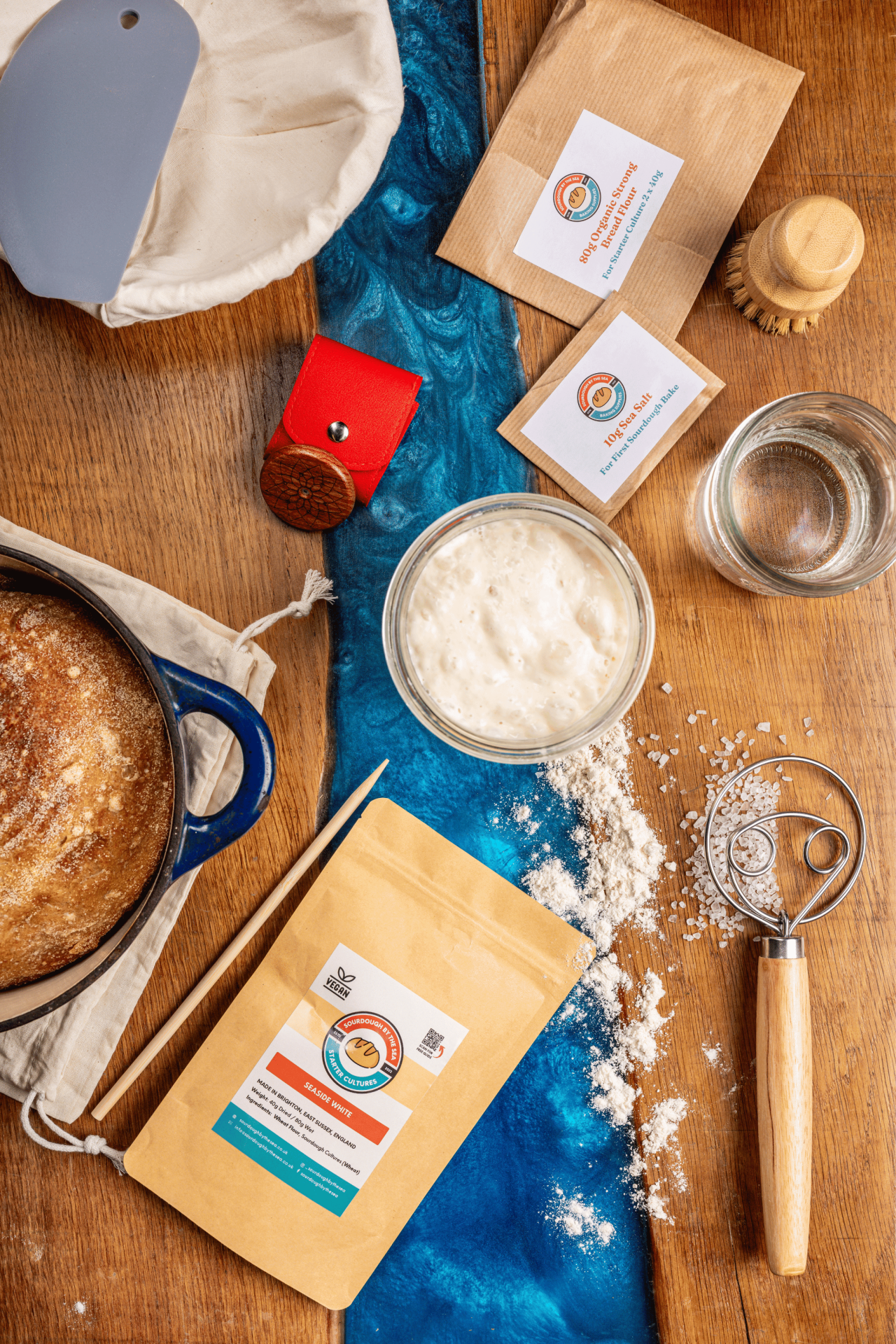
The easiest way is to make it yourself with a live starter. At Sourdough by the Sea, we provide everything you need to get started — even if you’ve never baked before.
Sourdough Breadmaking at Home with our Bestselling Sourdough Starter Gift Sets
Choose from one of our Bestselling Sourdough starter gift sets – which comes with all you need to make delicious tasting bread and pizzas any time of year. Starter jar, proofing basket, dough cutter and our guide to looking after starter culture, recipes and more.