Gut health is getting a lot of attention.
And sourdough often gets grouped with other fermented foods.
So it’s a fair question:
Can sourdough actually help your gut?
The answer is a bit more nuanced than most headlines suggest.
In this guide, we’ll explain what sourdough does in your body, where the benefits come from, and how to get them.
Can sourdough help gut health?
Sourdough may support gut health because its fermentation process breaks down certain compounds and produces beneficial by-products that are easier to digest. However, it is not a probiotic food after baking, so its benefits come mainly from improved digestibility rather than live bacteria.
What “gut health” really means
When people talk about gut health, they usually mean:
- a balanced gut microbiome
- good digestion
- minimal bloating or discomfort
Foods can support this in different ways:
- Probiotics → live bacteria
- Prebiotics → food for bacteria
- Digestibility → how easy food is to break down
Sourdough mainly helps in the third category.

How sourdough may support gut health
Sourdough is made through slow fermentation.
During this process:
1. It reduces hard-to-digest compounds
This includes some FODMAP sugars that can cause bloating.
2. It partially breaks down gluten
Making it easier for some people to tolerate.
3. It produces beneficial acids
These can support digestion and slow carbohydrate absorption.
This is why many people feel better after eating sourdough compared to standard bread.
Important: sourdough is not a probiotic food
This is where a lot of confusion comes in.
The bacteria involved in fermentation are mostly destroyed during baking.
So sourdough does not deliver live probiotics like:
- yoghurt
- kefir
- fermented vegetables
Instead, the benefit comes from how the bread is transformed before baking.
When sourdough may not help
Sourdough won’t improve gut health in every case.
You may not notice benefits if:
- the bread is not properly fermented
- it contains additives or commercial yeast
- you have a strong gluten intolerance
- portion sizes are large
Also, it’s not a cure for digestive conditions.
How to get the gut health benefits
If you want the most from sourdough:
1. Choose long fermentation
12–24 hours is ideal.
2. Keep ingredients simple
Flour, water, salt.
3. Bake it yourself (best option)
This gives you full control over the process.
Recommended Reading –
Learn if you can eat sourdough bread every day, its health benefits, and how to bake real sourdough at home.
Want sourdough that’s actually easier to digest?
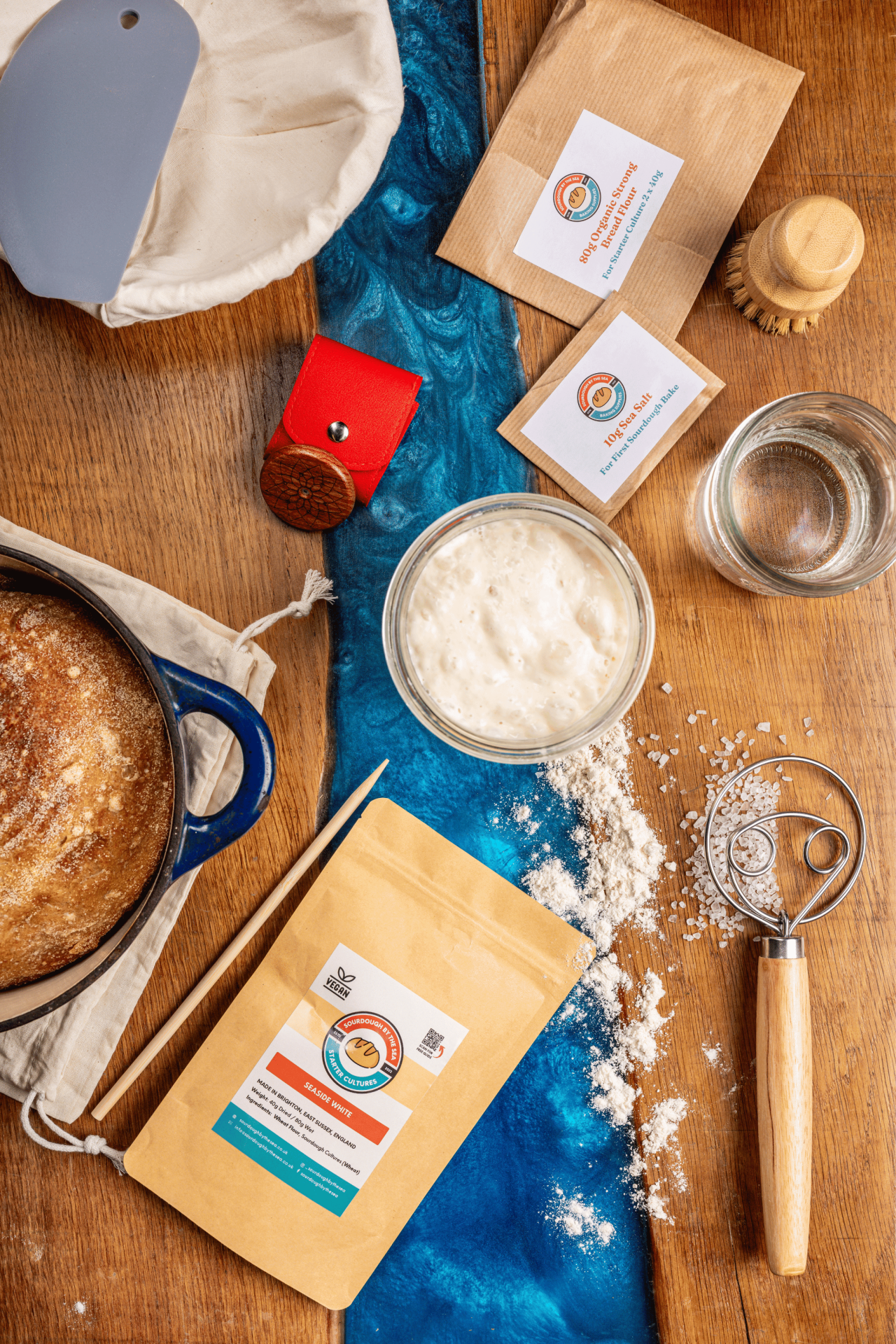
The easiest way is to make it yourself with a live starter. At Sourdough by the Sea, we provide everything you need to get started — even if you’ve never baked before.
Sourdough Breadmaking at Home with our Bestselling Sourdough Starter Gift Sets
Choose from one of our Bestselling Sourdough starter gift sets – which comes with all you need to make delicious tasting bread and pizzas any time of year. Starter jar, proofing basket, dough cutter and our guide to looking after starter culture, recipes and more.