Many loaves in supermarkets are labelled sourdough.
But are they really sourdough?
The short answer: often, no.
Below is a clear breakdown of what supermarket sourdough usually is, how it differs from real sourdough, and what to look for if you want the real thing.
What Is Real Sourdough?
Real sourdough is made using natural fermentation.
It contains:
- Flour
- Water
- Salt
- A live sourdough starter
That’s it.
The dough is fermented slowly using wild yeast and lactic acid bacteria.
This process creates flavour, structure, and natural acidity.
No commercial yeast.
No shortcuts.
Why Supermarket Bread Is Often Called “Sourdough”
Supermarket bread is made at scale.
Speed and consistency matter more than tradition.
To achieve a “sourdough-style” flavour quickly, many producers use:
- Commercial yeast
- Dried sourdough powder
- Added acids or flavourings
This allows bread to taste slightly sour without long fermentation.
It looks like sourdough.
It’s labelled sourdough.
But the process is different.
Is Supermarket Bread Actually Sourdough?
In many cases, no.
If the ingredient list includes:
- Yeast
- Vinegar
- Acetic acid
- “Sourdough flavour”
It is not traditional sourdough.
True sourdough does not need yeast or additives to rise or taste sour.
Pros of Supermarket “Sourdough”
To be fair, there are some benefits.
1. Convenience
It’s easy to buy.
It’s ready when you need it.
2. Consistency
Every loaf tastes the same.
There are fewer surprises.
3. Lower Cost
It’s usually cheaper than handmade sourdough.
For everyday toast, that might be enough.
Cons of Supermarket “Sourdough”
This is where the differences matter.
1. Short Fermentation
Fast production means less flavour development.
2. Added Ingredients
Many loaves rely on additives instead of time.
3. Not True Sourdough
Despite the name, the process isn’t the same.
4. Digestibility
Without long fermentation, some people find it harder to digest.
How to Tell If Bread Is Real Sourdough
Check the ingredient list.
Real sourdough usually lists:
- Flour
- Water
- Salt
- Sourdough starter
That’s it.
If you see yeast or additives, it’s a shortcut version.
Why Real Sourdough Takes Longer
Natural fermentation can’t be rushed.
Time allows:
- Flavour to develop
- Dough structure to strengthen
- Acids to form naturally
This is why real sourdough is baked by:
- Artisan bakeries
- Small producers
- Home bakers
Not mass production lines.
Is Real Sourdough Healthier?
It can be.
Long fermentation may:
- Reduce phytic acid
- Improve mineral absorption
- Make bread easier to digest for some people
It’s still bread.
But the process matters.
Why More People Are Baking Their Own Sourdough
Because it removes the guesswork.
When you bake at home, you control:
- Ingredients
- Fermentation time
- Flavour
With a good sourdough starter, you don’t need yeast or additives.
Once you have a starter, you can bake for years.
That’s why many people start with a sourdough starter kit, rather than relying on supermarket bread labelled as sourdough.
So, Is Supermarket Bread Actually Sourdough?
Sometimes.
But often, it’s sourdough in name only.
If it’s made quickly, with yeast and flavourings, it’s not traditional sourdough.
Real sourdough takes time.
That time is the difference.
Final Thought
If you enjoy supermarket bread, that’s fine.
But it helps to know what you’re buying.
If you want real sourdough:
- Look for short ingredient lists
- Support artisan bakers
- Or learn to bake it yourself
Once you understand the process, the label matters less than the method.
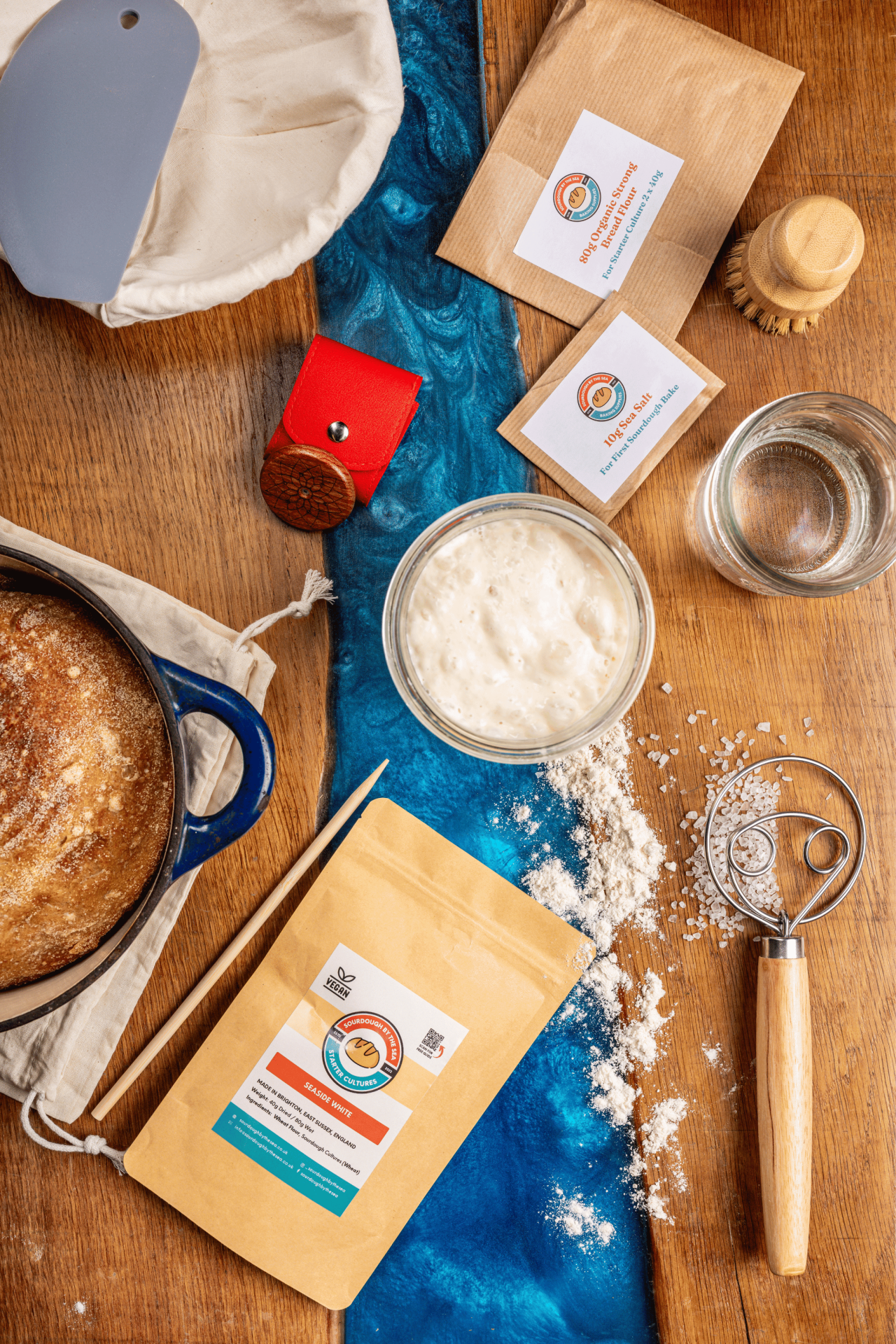
Sourdough Breadmaking at Home with our Bestselling Sourdough Starter Gift Sets
Choose from one of our Bestselling Sourdough starter gift sets – which comes with all you need to make delicious tasting bread and pizzas any time of year. Starter jar, proofing basket, dough cutter and our guide to looking after starter culture, recipes and more.