Sourdough is often described as a healthier type of bread.
But what actually makes it different?
It’s not just the ingredients — it’s how the bread is made.
In this guide, we’ll break down the key reasons sourdough is often seen as a better option, and what to look for if you want the real benefits.
What makes sourdough healthier?
Sourdough can be healthier than standard bread because its natural fermentation process improves digestibility, lowers the glycaemic response, and increases the availability of certain nutrients. These benefits depend on using proper fermentation methods and simple ingredients.
The key difference: fermentation
The biggest difference between sourdough and regular bread is fermentation.
Instead of using fast commercial yeast, sourdough is made with wild yeast and bacteria.
This process takes time — often 12 to 24 hours — and it changes the bread in several important ways.
1. It’s easier to digest
During fermentation:
- gluten is partially broken down
- certain sugars are reduced
- the dough is pre-digested
This can make sourdough feel easier on the stomach for many people.
It’s why sourdough is often linked to less bloating and better digestion.
2. It has a lower glycaemic impact
Sourdough tends to raise blood sugar more slowly than standard bread.
This is because fermentation:
- changes the structure of starch
- produces acids that slow digestion
The result is:
- steadier energy
- fewer sharp spikes
3. It may improve nutrient availability
Grains contain minerals like iron, zinc, and magnesium.
But they also contain compounds that can block absorption.
Fermentation helps break these down, which can make nutrients easier for your body to use.
4. It usually has simpler ingredients
Real sourdough is made with:
- flour
- water
- salt
That’s it.
Compared to many supermarket breads, it often avoids:
- additives
- preservatives
- unnecessary processing
Important: not all sourdough is equal
Some products labelled sourdough don’t follow traditional methods.
You may not get the same benefits if:
- fermentation time is short
- commercial yeast is added
- ingredients are overly processed
When sourdough isn’t “healthier”
Sourdough is still bread.
It won’t be the best choice if:
- you have a gluten intolerance
- you eat large amounts
- you’re looking for a low-carb food
So it’s better to think of it as a better option, not a perfect one.
How to get the real benefits
If you want sourdough that delivers:
1. Look for long fermentation
This is where most of the benefits come from.
2. Choose quality flour
Wholemeal and rye can improve nutritional value.
3. Bake it yourself (best option)
This gives you full control over the process.
Recommended Reading –
Learn if you can eat sourdough bread every day, its health benefits, and how to bake real sourdough at home.
Want sourdough that’s actually easier to digest?
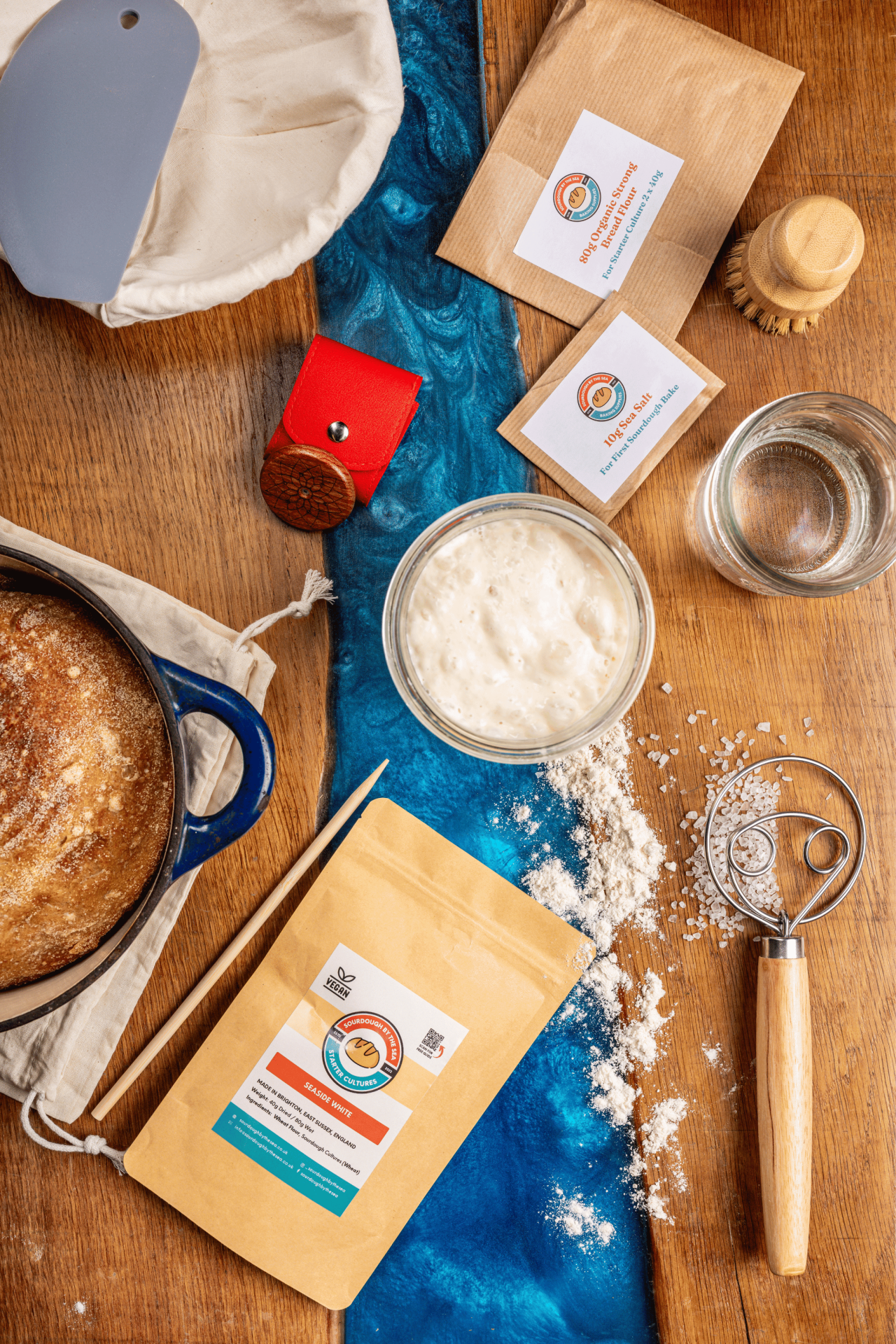
The easiest way is to make it yourself with a live starter. At Sourdough by the Sea, we provide everything you need to get started — even if you’ve never baked before.
Sourdough Breadmaking at Home with our Bestselling Sourdough Starter Gift Sets
Choose from one of our Bestselling Sourdough starter gift sets – which comes with all you need to make delicious tasting bread and pizzas any time of year. Starter jar, proofing basket, dough cutter and our guide to looking after starter culture, recipes and more.