Sourdough bread, with its chewy texture and distinctive taste, has been a beloved staple for centuries, but have you ever wondered why it’s called “sourdough” when it doesn’t always taste sour?

In this post, we’ll delve into the origins of the name and uncover the fascinating reasons behind it.
The name “sourdough” may be somewhat misleading, as not all sourdough bread is sour. However, the term reflects the historical roots and traditional methods of bread-making that have shaped this beloved culinary staple.
- Historical Roots of Sourdough Bread: Sourdough bread has a long and storied history, dating back thousands of years. Ancient civilizations relied on natural fermentation to leaven their bread, using wild yeast and lactobacilli found in the environment. This traditional method gave rise to the sourdough we know today.
- Etymology of the Name: The term “sourdough” is derived from Old English, where “sūr” means sour and “dōh” means dough. But here’s the intriguing part: while sourdough bread can indeed have a tangy flavor, not all sourdough loaves are sour. So why the name?
- The Role of Fermentation: At the heart of sourdough bread is the process of fermentation. Unlike commercial bread, which relies on fast-acting yeast, sourdough is leavened through natural fermentation. Wild yeast and lactobacilli present in the dough produce lactic acid and acetic acid during fermentation, contributing to its unique flavor profile.
- Factors Influencing Sourness: While fermentation is essential to sourdough bread-making, several factors can influence its sourness. The type of flour used, the hydration level of the dough, and the temperature and duration of fermentation all play a role in determining the degree of sourness in the final product.
Ready to Start Making Your Own Sourdough?
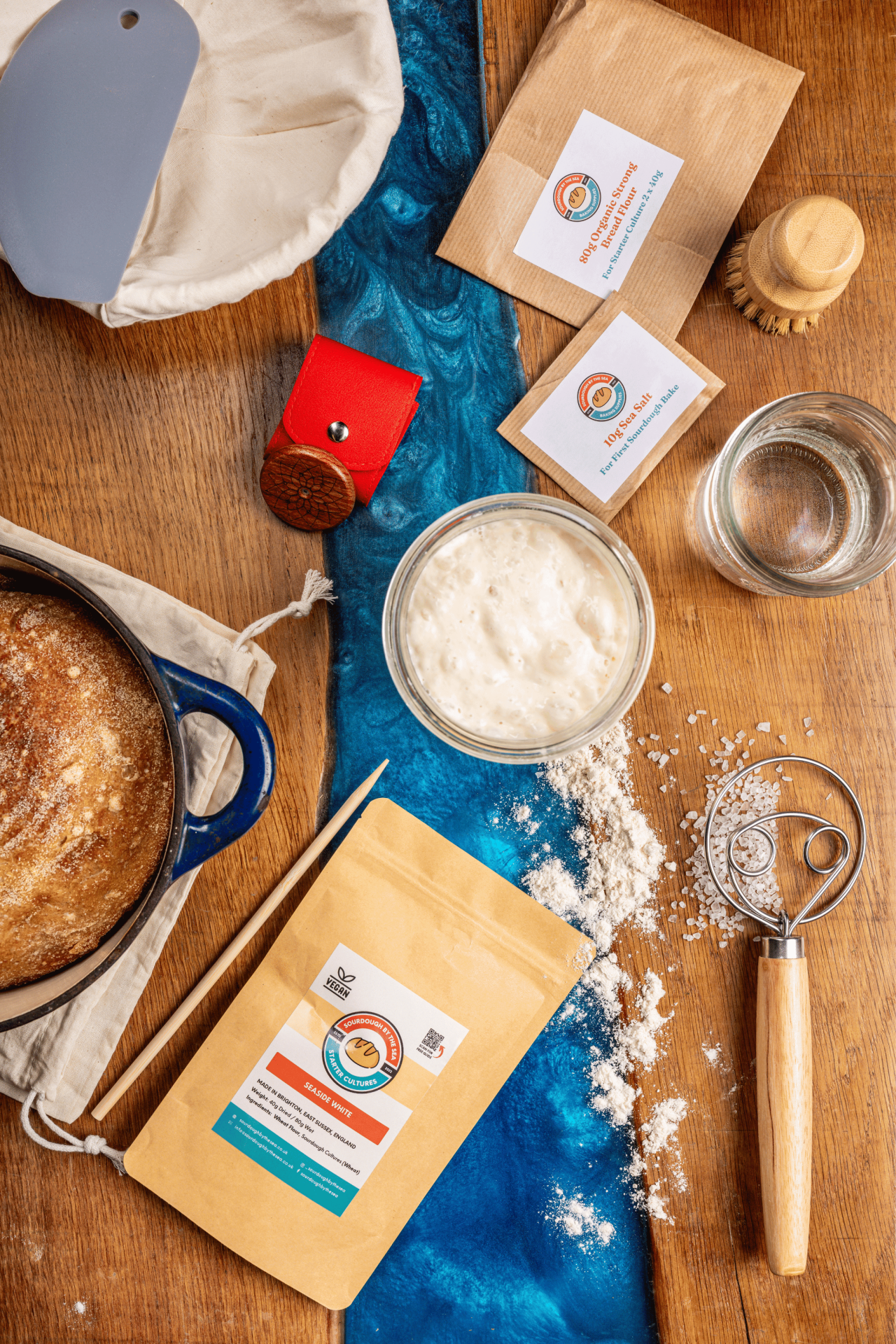
At Sourdough by the Sea we offer Starter Gift Sets that include everything you need: starter jar, proofing basket, dough cutter, full guide to maintaining your culture + recipes. Check out our Sourdough Starter Gift Sets.

- Variability in Sourdough Flavor: Sourdough bread is known for its variability in flavor, ranging from mildly tangy to intensely sour. This variability stems from the diversity of wild yeast and bacteria present in different sourdough starters, as well as the fermentation conditions employed by bakers.
- Cultural and Regional Influences: The flavor profile of sourdough bread can also be influenced by cultural and regional factors. For example, San Francisco sourdough is renowned for its pronounced tanginess, attributed to the unique microbial strains found in the city’s air.
- Modern Interpretations of Sourdough: In recent years, sourdough bread has experienced a resurgence in popularity, with artisanal bakeries and home bakers alike embracing its rustic charm. While some seek out the sour tang characteristic of traditional sourdough, others prefer milder, sweeter variations.
- The Appeal of Sourdough Beyond Sourness: Despite its name, the allure of sourdough bread extends far beyond its sour flavor. Its chewy texture, complex aroma, and nuanced taste make it a favorite among bread enthusiasts worldwide. Additionally, sourdough’s natural fermentation process offers various health benefits, including improved digestibility and increased nutrient bioavailability.
Sourdough Breadmaking at Home with our Bestselling Sourdough Starter Gift Sets
Choose from one of our Bestselling Sourdough starter gift sets – which comes with all you need to make delicious tasting bread and pizzas any time of year. Starter jar, proofing basket, dough cutter and our guide to looking after starter culture, recipes and more.