Many people find that regular bread leaves them feeling bloated or uncomfortable.
But sourdough often feels different.
That’s because it’s made using a slow, natural fermentation process that changes how your body handles it.
In this guide, we’ll explain why sourdough can be easier to digest, when it isn’t, and how to get the real benefits.
Is sourdough easier to digest?
Yes, sourdough is often easier to digest than regular bread because natural fermentation breaks down gluten and certain sugars that can be difficult for the body to process. However, this depends on how the sourdough is made and individual tolerance.
Most supermarket bread is made quickly using commercial yeast.
This means:
- very short fermentation time
- more intact gluten
- higher levels of FODMAP sugars
These can sit in your gut and ferment, which can lead to:
- bloating
- gas
- discomfort
Sourdough uses wild yeast and bacteria instead of fast-acting commercial yeast.
Over time, this process:
1. Breaks down gluten
The fermentation partially breaks down gluten proteins, making them easier for your body to handle.
2. Reduces FODMAPs
These are fermentable sugars that can cause bloating. Long fermentation lowers their levels.
3. Pre-digests the dough
The bacteria do some of the work before you even eat the bread.
This is why many people feel less discomfort after eating real sourdough.
Important: not all sourdough is the same
Some bread labelled “sourdough” isn’t fully fermented.
You may not get the digestive benefits if:
- it’s made with added commercial yeast
- fermentation time is too short
- it contains additives
Real sourdough should be:
- slow fermented (often 12–24 hours)
- made with flour, water, and salt
- naturally risen
When sourdough might still cause issues
Sourdough isn’t suitable for everyone.
You may still have problems if:
- you have a strong gluten intolerance
- you eat large amounts
- the bread is poorly fermented
It’s also important to note:
Sourdough is not gluten free.
How to get the digestive benefits
If you want sourdough that’s easier on your gut:
1. Choose long-fermented bread
This is where most of the benefits come from.
2. Keep ingredients simple
Avoid unnecessary additives.
3. Bake it yourself (best option)
This gives you full control over fermentation time and ingredients.
Recommended Reading –
Learn if you can eat sourdough bread every day, its health benefits, and how to bake real sourdough at home.
- Why is sourdough easier to digest?
- Is sourdough healthy?
- Can I Eat Sourdough Bread Daily for Weight Loss?
Want sourdough that’s actually easier to digest?
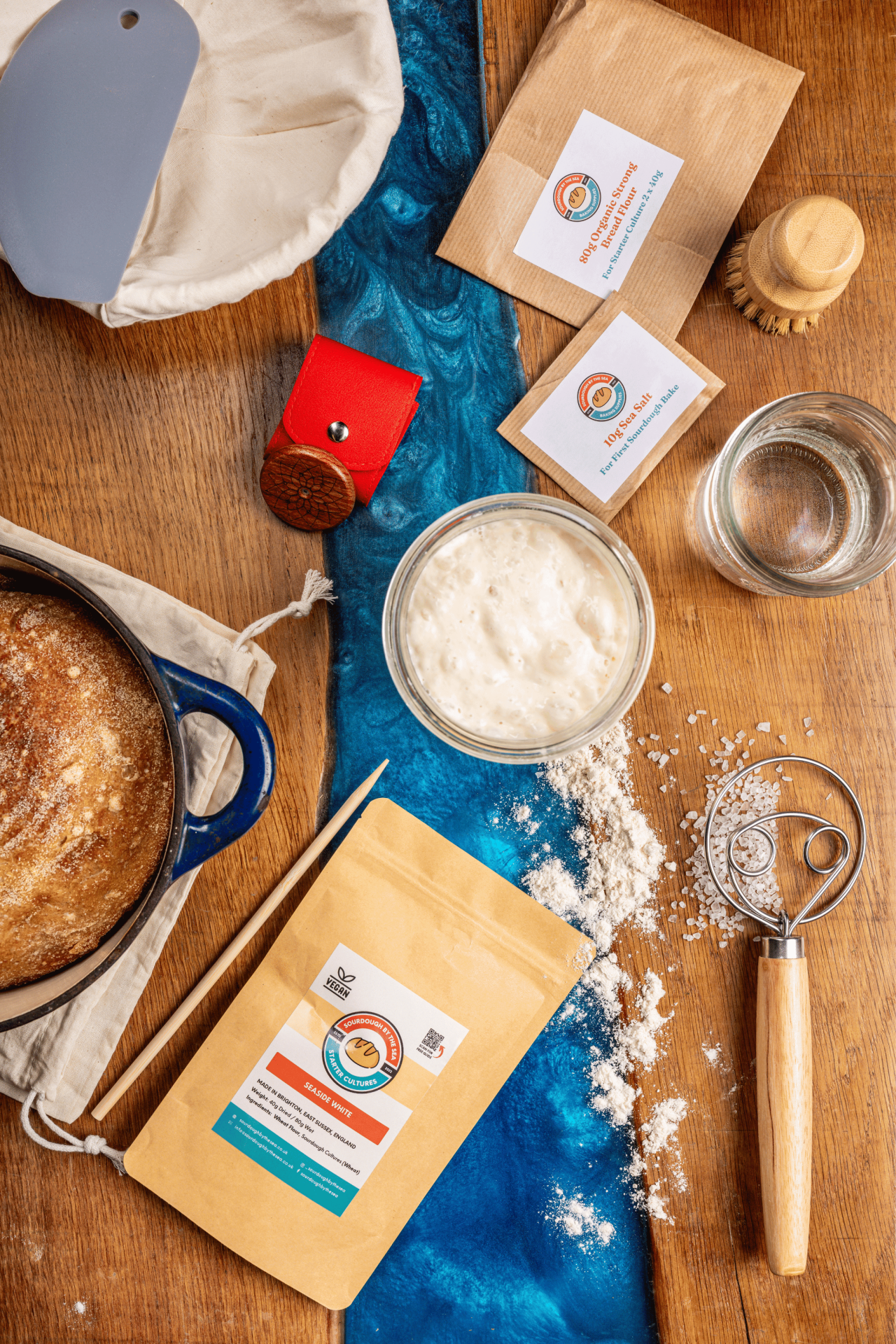
The easiest way is to make it yourself with a live starter. At Sourdough by the Sea, we provide everything you need to get started — even if you’ve never baked before.
Sourdough Breadmaking at Home with our Bestselling Sourdough Starter Gift Sets
Choose from one of our Bestselling Sourdough starter gift sets – which comes with all you need to make delicious tasting bread and pizzas any time of year. Starter jar, proofing basket, dough cutter and our guide to looking after starter culture, recipes and more.